 By
By 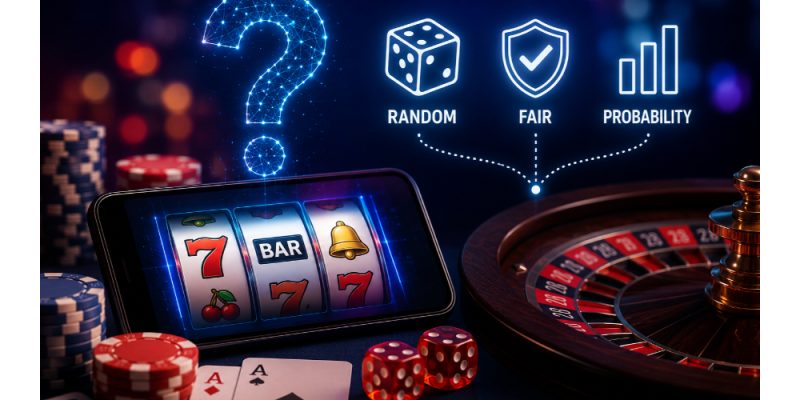
If you’ve ever wondered whether an online slot or digital blackjack table is truly random — or quietly rigged against you — you’re asking the right question. The answer lies in a piece of technology called the Random Number Generator (RNG). Here’s exactly how it works, how regulators verify it, and what actually determines your odds.
→ RNGs are algorithms (PRNGs) that generate unpredictable outcome sequences — not physical wheels or chips.
→ Regulated platforms are independently audited by labs like eCOGRA, iTech Labs, and GLI.
→ RNG is not RTP: randomness guarantees fairness of process, not a specific payback rate.
→ “Hot,” “cold,” and “due” machines are myths — every spin is a statistically independent event.
WHAT IS AN RNG?
A Random Number Generator is software (occasionally paired with a hardware component) that produces an unpredictable, statistically even sequence of numbers. Online casinos map those numbers to outcomes — which card is dealt, where the reels stop, what number a virtual roulette ball lands on.
Two Broad Categories
- Pseudo-Random Number Generators (PRNG) — algorithms that generate long, unpredictable sequences from a starting “seed” value. Almost all regulated online slots and digital table games run on PRNGs.
- True/Hardware RNGs — generate randomness from physical entropy sources, such as electrical or atmospheric noise. Less common in everyday play, but used in some certification systems.
HOW RNG WORKS, TECHNICALLY
A PRNG starts from a seed — a number derived from an unpredictable input such as system time or hardware noise. A mathematical algorithm, often a cryptographically secure PRNG (CSPRNG), transforms that seed into a long stream of numbers that pass rigorous statistical randomness tests.
Licensed platforms run the RNG continuously in the background — generating results many times per second — even when nobody is actively playing. The exact number selected the instant you click “spin” or “deal” determines your outcome, which is why timing manipulation by a player is not possible.
For slots specifically, the RNG output is translated through a “reel map”: a table assigning ranges of RNG numbers to symbol combinations, including rare jackpot outcomes. That’s why a jackpot symbol can look rare while still being mathematically reachable on every single spin.
RNG TYPES COMPARED
| Type | How It Works | Common Use | Predictability |
| Pseudo-RNG (PRNG) | Algorithm + seed value | Online slots, digital table games | Not practically predictable when certified |
| Cryptographic RNG (CSPRNG) | Cryptographic hash-based generation | Regulated real-money platforms | Extremely high security |
| Hardware / True RNG | Physical entropy source | Certification systems, some draws | True physical randomness |
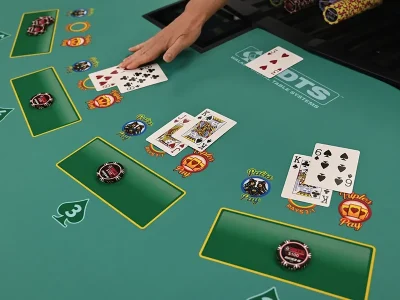
| Live Dealer Games | Real cards, wheels, dice + camera tracking | Live blackjack, roulette, baccarat | Physical randomness — no software involved |
“A game can be perfectly random and still have a low RTP — randomness is about fairness of process, not the size of the payback.”
RNG VS. RTP
Players often conflate randomness with odds, but they’re separate concepts. RNG determines that each outcome is unpredictable and fair. Return to Player (RTP) is a separate, pre-configured design parameter — set by the game’s math model within regulatory limits — that determines the average percentage paid back over time. Independent testing labs verify both separately before a game is approved for a regulated U.S. market.
How to Verify a Site’s RNG
- Look for certifications from eCOGRA, iTech Labs, GLI, or BMM Testlabs.
- Confirm licensing with your state gaming commission (e.g., NJ DGE, Michigan GCB, PA GCB).
- Check that RTP percentages are published for individual games.
- Avoid unlicensed offshore sites with no audit trail or certification seal.
COMMON MISTAKES & MYTHS
- Believing a machine runs “hot” or “cold” — each RNG result is statistically independent of the last.
- Assuming time of day changes your odds — RNGs have no calendar awareness.
- Thinking a big recent jackpot means a game “won’t hit again soon.”
- Believing a VPN or region change alters the RNG’s odds — it typically just violates the platform’s terms of service.
- Assuming regulated RNGs adjust based on a specific player’s history — certified systems must treat every player identically, and this is directly audited.
LATEST UPDATES FOR 2026
- More U.S. state regulators now mandate quarterly independent RNG and RTP audits for licensed operators.
- “Provably fair” systems using blockchain-based hash-seed verification are expanding beyond crypto casinos into mainstream platforms.
- Live dealer studios continue to grow quickly, driven by players who want physically observable randomness rather than algorithmic RNG.
EXPERT TAKE
Stick to operators licensed in your home state, and look for the certification seal and audit date, usually in the site footer. RNG certification guarantees a fair, unpredictable process — not favorable results in any given session. If a platform can’t show independent testing credentials, treat that as a red flag regardless of how polished its games look.
It’s also worth remembering that RNG fairness and smart bankroll management are separate issues entirely. A certified RNG ensures every outcome is unpredictable and untampered with, but it says nothing about how much of your bankroll a given session should risk. Pair a verified platform with a fixed budget, and you get the two pillars of a genuinely fair, sustainable playing experience.
FREQUENTLY ASKED QUESTIONS
Is online casino RNG really random?
Yes, when it is properly certified and audited by an independent testing lab and operates on a licensed platform.
Can a casino manipulate its RNG in real time?
In regulated U.S. markets, no. Doing so is illegal and would be caught by required independent audits and continuous compliance monitoring.
What’s the difference between RNG games and live dealer games?
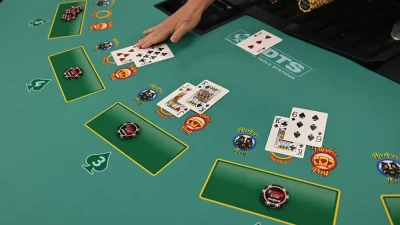
RNG games use software algorithms to generate outcomes. Live dealer games use real cards, wheels, or dice, captured by cameras and sensors — no RNG software determines the outcome.
Does RNG mean every player has an equal chance at a jackpot?
Yes — each spin or hand is an independent event with the same underlying odds for every player, though the overall payback percentage is set by the game’s RTP design.
How often are online casino RNGs tested?
It varies by state and operator, but many regulated jurisdictions now require quarterly or annual independent testing, reported to the state gaming commission.





Comments